


Are you stuck in the Azar loop? You know the one. Swipe, connect, "Hi," "Where are you from?"... then disconnect. You've swiped through what feels like the entire population of the planet, dodged more bots than you can count, and had your fair share of awkward, dead-end chats. It's time for a change.
Look, Azar is a legend. It pioneered the "swipe-to-video-chat" model and let us instantly connect with people thousands of miles away. But after a while, the magic fades. Maybe you're looking for something more than just a random face. Maybe you want a gaming buddy, a serious date, or even a stage to show off your talents.
Don't worry, your social app boredom ends today. I've spent countless hours exploring the app stores, going undercover to personally test a ton of apps. I've sorted the gems from the junk to bring you this ultimate list of Azar alternatives. Each one has its own vibe, its own community, and I guarantee one of them is exactly what you're looking for.
10 Alternatives That Are Way More Fun Than Azar
1. OmeTV
OmeTV takes things back to basics. It’s the purest form of random video chat you can find, mirroring Azar's original, simple concept. Don't expect fancy filters or distracting features here; the entire experience is built around one thing: straightforward, one-on-one conversations with people from around the world.
Who it's for: People who genuinely want to meet international friends, practice a new language, or simply kill time by talking to a random human. It has a massive global user base, with a lot of active people from Eastern Europe and Latin America.
My Take: If Azar is a bustling, noisy city square, OmeTV is more like a chill community park. People here just seem a bit more patient. I once spent a solid half-hour talking about coffee culture with a guy from Turkey and learned some Portuguese slang from a girl in Brazil. Sure, weirdos exist everywhere, but OmeTV's moderation feels a little tighter, meaning fewer bots and inappropriate encounters. The interface is super clean and simple, letting you focus on the chat itself.
Pros: Free features are more than enough, large user base, fast connections, and a relatively clean community.
Cons: The single-minded focus on chat can feel boring if you’re looking for more features.
2. Monkey
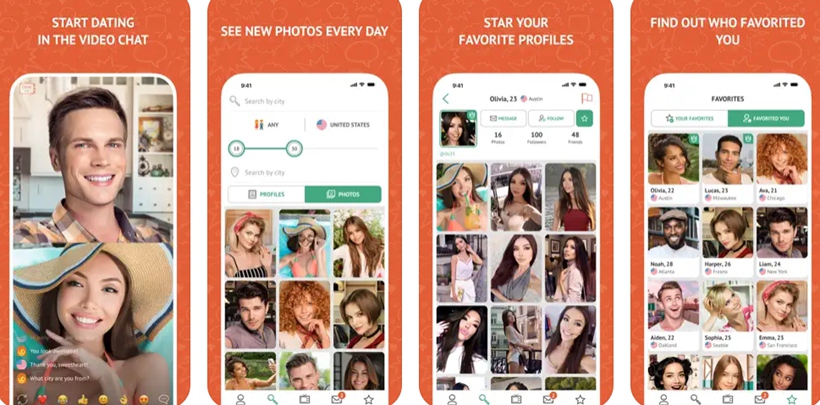
Get ready for a high-energy experience with Monkey, an app built on fast-paced, 15-second video matches. You have a mere quarter of a minute to make an impression and convince your match to continue the chat. If you both hit the "extend" button, you get more time. It also takes a page from TikTok's playbook, allowing you to post short video clips to your profile to show off your personality.
Who it's for: Primarily Gen Z. This is for young people who crave fast, direct, and entertaining social interactions.
My Take: Monkey is a pure shot of adrenaline. Opening the app feels like joining a massive online party. The 15-second rule is a thrill; it's like a social "beat the clock" challenge. It forces you to be interesting fast, or you're on to the next one. I’ve met a ton of cool kids on there—skaters, aspiring rappers, you name it. To be honest, if you're a bit older (like me), the pace can feel a little overwhelming.
Pros: Exciting and novel gameplay, a vibrant and young user base, and a great way to meet a lot of people quickly.
Cons: Conversations are often superficial. Not the place for deep, meaningful connections.
3. Bigo Live
Forget simple one-on-one chats; Bigo Live is a massive, full-blown live-streaming universe. Here, you can become the main event by hosting your own stream—whether you're singing, dancing, gaming, or cooking—and earn virtual gifts from your fans. Alternatively, you can dive in as a viewer, exploring endless broadcasts and interacting with streamers and audiences in real-time. While it does offer private video calls, they serve as a feature within its larger, vibrant streaming community.
Who it's for: Aspiring influencers, people with a talent to share, and anyone who loves watching live broadcasts and being part of a lively community. Its users are all over Southeast Asia, the Middle East, and the West.
My Take: Bigo Live is a whole other universe. The first time I opened it, I was blown away by the wall of live rooms. The interactivity is insane. You drop a comment, and the streamer responds instantly. If you just want a vibrant place to hang out, Bigo Live will never bore you.
Pros: Incredibly diverse content, highly interactive, potential to earn money, and a strong sense of community.
Cons: A little commercialized, can feel overwhelming and chaotic if you just want to chat.
🎉 Join 500 Million People Worldwide! New Users Download Now for an Exclusive Gift! 🎉

BIGO LIVE: Live Your Moments
Don't miss any trending content! Join 500 million friends from around the world and enjoy live streaming fun!


4. MeetMe
MeetMe is a social discovery network that blends the feel of a classic social media site with the energy of live-streaming. The core idea is to help you find new people to chat with, primarily those who are nearby. You can browse through profiles, send messages, and dive into its most prominent feature: the "Live" tab, where countless users are broadcasting themselves in real-time. It's less of a talent show and more of a massive, public video hangout.
Who it's for: People looking for a casual way to meet new friends or potential dates in their local area. It's for those who enjoy both browsing profiles and the spontaneous nature of live video.
My Take: MeetMe feels like a neighborhood block party that's gone digital. The live streams are very down-to-earth. You'll find people just chilling in their living room talking about their day, playing music, or answering questions from viewers. It’s much more casual than the high-production streams on other platforms. I've used it to strike up conversations with people in my city I'd never have met otherwise. It successfully merges the "find people near me" function with video, which is a unique combination.
Pros: Great for connecting with local people, blends profile browsing with live video, and has a very large and active user base.
Cons: User intentions are a mixed bag (friendship vs. dating), and the interface can feel a bit cluttered with all its features
5. Bumble
While known primarily as a dating app, Bumble offers an excellent video chat feature that makes it a strong contender. Its defining characteristic is its famous golden rule: after two people match, only the woman can make the first move and initiate a conversation. This female-first approach also applies to initiating video calls, giving women control over the interaction from start to finish.
Who it's for: Women who want more control in their dating life, and the men who respect that. It’s for people looking for a more serious connection.
My Take: Using Bumble just feels... safer and more respectful. As a guy, you don't have to stress over the perfect opening line. The video chat feature is typically used as a "vibe check" after you've been texting for a bit. It’s the perfect pre-date screener. The users on Bumble are generally more intentional, so the quality of conversation is much higher than on a purely random app.
Pros: The female-first approach creates a more comfortable environment, users are purpose-driven (mostly for dating), and profiles are detailed.
Cons: It's not designed for random chatting. The matching process is slower if you're just looking for a casual conversation.

6. Hinge
Hinge proudly calls itself "the dating app designed to be deleted," a philosophy that shapes its entire experience. It moves beyond simple swiping by encouraging users to build detailed profiles with creative prompts and photos. To start a chat, you don't just swipe right; you like or comment on a specific part of someone's profile, leading to more meaningful conversations from the get-go. Its integrated video dating feature is seamless and designed to help you find a real connection.
Who it's for: Young professionals (20s-30s) in urban areas who are tired of swipe culture and are looking for a long-term, meaningful relationship.
My Take: Hinge is the most "thoughtful" dating app I've ever used. You're not just looking at a headshot; you're getting a glimpse into someone's personality. I met a previous partner on Hinge, and our first video call felt like catching up with an old friend. People here are serious, and ghosting is far less common.
Pros: The community is very serious about dating, the matching mechanism encourages real conversation, and it’s easy to find common ground.
Cons: It’s slow-paced. Not for you if you're looking for a quick hookup or just a random chat to kill time.
7. HelloTalk
HelloTalk is a global language exchange community designed with a clear purpose: to help you learn a new language by talking to native speakers. The concept is simple—if you want to learn Spanish, you find a native Spanish speaker who wants to learn English, and you become language partners. The app is packed with powerful tools like built-in translation, text-to-speech, and grammar correction to support text, voice, and video chats.
Who it's for: Anyone and everyone in the world who wants to learn a new language or is willing to help others learn their native tongue.
My Take: HelloTalk is an absolute game-changer for language learners. Here, conversations have a purpose. To practice my French, I connected with a journalist from Paris. We now video chat for an hour every week. It’s more effective than any paid class. The community is incredibly supportive, and native speakers will jump in to correct your grammar for free.
Pros: Goal-oriented, strong learning atmosphere, you can make genuine friends with shared goals, and the built-in tools are fantastic.
Cons: The focus is purely on language exchange. If that’s not your goal, you'll probably find it boring.
8. Tinder
Tinder is the undisputed giant of swipe-based dating, but it's evolved beyond its simple "swipe right for yes, left for no" origins. Many users don't realize that it now includes a solid "Face to Face" video chat feature. After you match with someone, you can both opt-in to a video call, allowing you to connect on a deeper level without ever leaving the app.
Who it's for: Literally everyone. The user base is vast and diverse, covering the entire spectrum from people looking for a one-night stand to those seeking a life partner.
My Take: Tinder is a massive social playground where you'll find all sorts of people. Its user base is unrivaled, which means you have more options, but also more noise. The video feature is a nice addition for a quick "vibe check." Be prepared for a fast-paced environment where people can lose interest and disappear in a flash.
Pros: The largest user base on the planet, high matching efficiency, and you'll always find someone online.
Cons: User quality is a mixed bag, people's intentions are all over the place, and you need a thick skin and good judgment.
9. Yubo
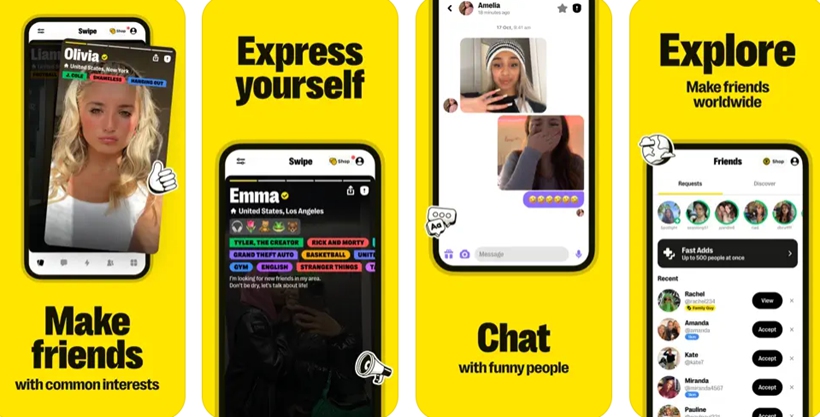
Yubo positions itself as a social discovery app, focusing less on one-on-one dating and more on helping you find your "tribe." It's a platform where you can join live streams based on your interests—like gaming, anime, or music—and hang out in group chats. The goal is to make friends in a casual, low-pressure environment.
Who it's for: Primarily teens and young adults (Gen Z) who are looking for a platonic place to make friends, not a dating app.
My Take: Yubo feels like a virtual youth center or a common room. You're not swiping on dates; you're dropping into live hangouts. I once jumped into a live stream where a group of people were just passionately debating the best pizza topping. It was hilarious and random. It’s a great way to find a squad to play Among Us with or just talk about the latest Netflix show.
Pros: Strong focus on community and friendship, good safety features for its young audience, and great for finding people with shared hobbies.
Cons: Can feel a bit chaotic, and the user base is heavily skewed towards a very young demographic, which might not be for everyone.
10. Discord
Discord breaks the mold of traditional social apps. Instead of matching you with strangers, it operates as a community platform built around "servers." These servers are dedicated hubs for specific topics, from gaming and movies to programming and study groups. You can join these communities and interact with like-minded people in text or voice channels, and its high-quality one-on-one and group video call features make it a powerful communication tool.
Who it's for: Originally built for gamers, it has now exploded to include anyone and everyone with a hobby or interest.
My Take: Discord completely changed how I think about "finding people to talk to." On Discord, you can just hop into a voice channel where a dozen people are already talking. I'm in a server for sci-fi movie fans, and we all pile into a voice channel for a live "post-movie discussion." It feels exactly like hanging out with a big group of old friends. You find your people first, then you socialize.
Pros: Interest-based socializing means you find true peers, incredibly strong community bonds, and top-tier voice and video quality.
Cons: Has a bit of a learning curve, you have to actively seek out and integrate into good servers, and it lacks the "surprise" element of random matching.
So, Which One Should You Pick?
Feeling overwhelmed by the options? Don't be. Here's the simple breakdown:
- If you just want a cleaner, better Azar: Go with OmeTV. It’s the no-frills, pure random chat experience.
- If you're young and want fast-paced fun: Monkey is your adrenaline rush. Yubo is your virtual hangout spot.
- If you want to be a star or just hang out live: Bigo Live is your global stage for high-energy talent shows.
- If you're serious about finding a relationship: Bumble puts women in control. Hinge is for finding a real connection.
- If you're chatting with a specific goal: HelloTalk is for language learning. Discord is for finding your gaming or hobby crew.
- If you just want to cast the widest net: Tinder has the most people. Period.
The world is huge, and the app store is even bigger. Don't limit yourself to just one app. Each of these Azar alternatives is a gateway to a different kind of digital world. Explore, experiment, and have fun. You’ll eventually find the online home that feels just right.
