


Your Facebook feed has become a graveyard of "Suggested for You" ads, political shouting matches, and life updates from people you haven't spoken to in a decade. You scroll for hours, yet you feel more isolated than when you started. It's time to stop looking for connection in a dead mall. We tested over 20 apps to find the 7 best Facebook alternatives that prioritize actual human interaction over engagement algorithms. Whether you crave the raw energy of live streaming or the quiet focus of niche forums, here is how to break out of your bubble in 2026.
Evaluation Criteria
We judged these apps based on three "User Reality" standards:
- Discovery Velocity: How fast can you hear a human voice or see a face you actually like?
- Vibe Check: Does it feel like a cocktail party, a riot, or a library?
- Reality Factor: Do connections stay on the screen, or do they translate to real talk?
Quick Summary: Best Facebook Alternatives
| App | Best For... | Discovery Velocity | Vibe | Rating |
|---|---|---|---|---|
| Bigo Live | Meeting strangers live | ★★★★★ | Chaotic & High Energy | ★★★★★ |
| Discord | Niche interest groups | ★★★★☆ | Cliques & Hobbies | ★★★★★ |
| Bumble BFF | Finding local friends | ★★★☆☆ | Intentional & Awkward | ★★★★☆ |
| Deep hobby discussions | ★★★★★ | Argumentative but Smart | ★★★★☆ | |
| Nextdoor | Real-life neighbors | ★★☆☆☆ | Helpful / Nosy | ★★★☆☆ |
| Mastodon | Text-based sanity | ★★★☆☆ | Tech-savvy & Quiet | ★★★☆☆ |
| Visual introverts | ★☆☆☆☆ | Peaceful & Aesthetic | ★★★★☆ |
1. Bigo Live: The Raw, Unfiltered Social Spark

If Facebook seems like a stale yearbook, Bigo Live is walking into a massive, neon-lit night market where everyone is holding a microphone. It hits your senses immediately: bright colors, the sound of music from three different countries, and a chaotic, bubbling energy you just don't get on text apps. You aren't just looking at static photos; you are watching people sing, cook, debate, or just hang out in real-time.
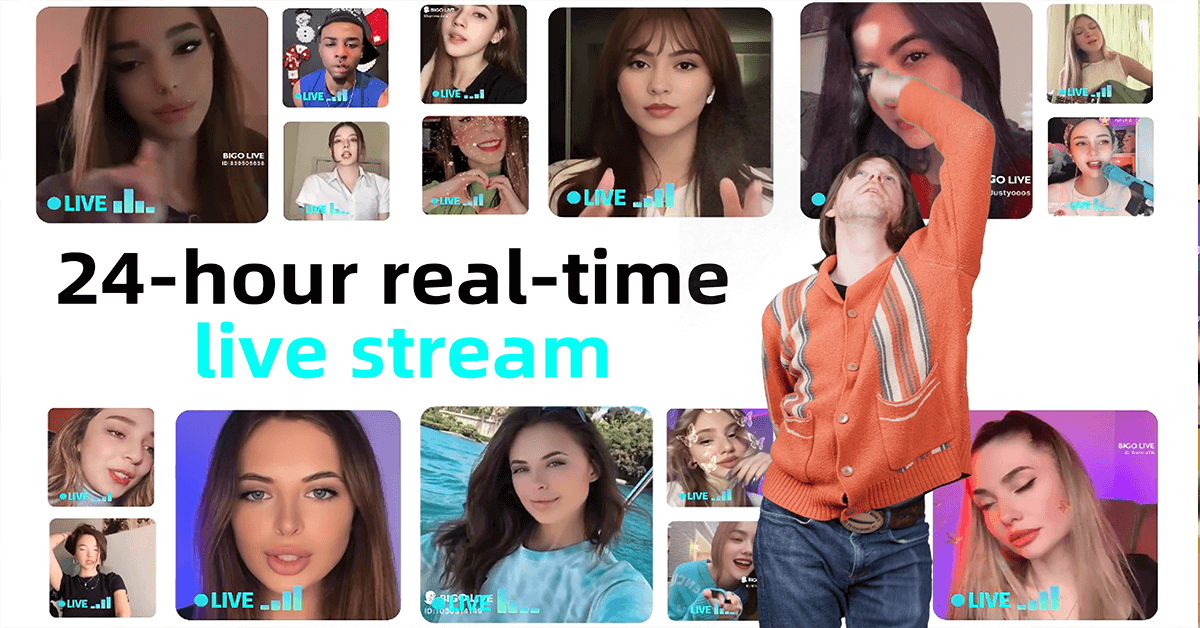
With over 600 million users, the scale is massive. You can hop from a room where a guy in Tokyo is playing guitar to a "Multi-guest" room where four strangers are debating pizza toppings. The barrier to entry is zero—you just tap and watch. It's loud, it's fast, and it's the closest thing to people-watching in a busy city square from your phone.
My Test (Hidden Trick):
Most users get stuck on the default "Popular" page, which can be overwhelming.
The Fix: Go to the "Explore" tab and filter by Country (e.g., Brazil, Vietnam, or Turkey). This is the best way to break the algorithm. Suddenly, you aren't just seeing the top 1% of broadcasters; you're seeing normal people just wanting to chat. It's instant cultural immersion without the plane ticket.
2. Discord: The Clubhouse for Your Obsessions
Discord isn't just for gamers. It's a series of millions of semi-private rooms, each with its own culture. Visually, it's darker and denser than Facebook. You'll hear that distinct "bloop" sound of a new message and see streams of text flying by in real-time. It's like walking into a bustling cafeteria where every table is dedicated to a specific obsession—from mechanical keyboards to 90s anime.
The magic here is "Voice Channels." You can jump into a voice room and just listen, like a live podcast that talks back. It removes the pressure of being "camera ready" while still giving you that human connection of hearing a laugh or a sigh.
My Test (The Flaw):
Discord's biggest flaw is notification spam. By default, it pings you for everything.
The Fix: The second you join a server, right-click (or long-press) the server icon and select Mute Server > Until I turn it back on. Then, go to "Notification Settings" and set it to "Only @mentions." If you don't do this, your phone will vibrate off the table, and you will delete the app in rage within 24 hours.
3. Bumble For Friends (BFF): The "Friend Date" Reality
This is the standalone app for people who want to skip the romance and just find a buddy to grab coffee with. It uses the same "swipe right" mechanic as the dating app, which seems a bit odd at first—judging potential friends by their photos appears superficial. But once you start chatting, the vibe is refreshing because everyone is there for the same reason: they are lonely and want to fix it.
It's intentional. You aren't shouting into the void; you are having 1-on-1 conversations. The anxiety of "do they want to talk to me?" is gone because, well, they swiped right too.
My Test (The Trick):
The 1-on-1 meetup can seem like a high-pressure blind date.
The Fix: Use the "Group Plan" feature. Instead of awkwardly messaging one person, you can create a plan (e.g., "Saturday Hike") and invite multiple matches. It lowers the stakes immensely. If one person is quiet, the others can carry the conversation.
4. Reddit: The Forum That Never Sleeps
Reddit is the anti-influencer app. Nobody cares what you look like; they care if you know what you're talking about. It's text-heavy, threaded, and organized into "subreddits" (communities). The visual experience is simple—mostly text on a white or black background, broken up by the occasional image or orange "upvote" arrow.
It's the best place to find people who share your specific, weird interests. Whether you are into sourdough baking or identifying obscure moss, there is a community of 50,000 people waiting to argue with you about it.
My Test (The Trick):
The default "Hot" sorting shows you stuff that was popular 6 hours ago.
The Fix: Sort your home feed or specific subreddits by "Rising." These are posts that are just starting to take off but haven't hit the front page yet. This is the "Goldilocks zone" where your comment will actually be seen and replied to.
5. Nextdoor: The Reality Check
Nextdoor connects you with the people who physically live around you. The interface looks like a map mixed with a news feed. It's grounded in physical reality—green icons for parks, red dots for alerts. You aren't meeting "internet friends"; you are meeting the guy who lives three houses down.
It's useful for buying cheap furniture or finding a lost cat, but be warned: it can get petty. You will see complaints about "suspicious teenagers" (who are just walking home) or un-mowed lawns.
My Test (The Flaw):
Nextdoor has a "Crime and Safety" section that will make you think you live in a war zone.
The Fix: Go into your settings and disable "Crime and Safety" alerts specifically. Keep the "For Sale" and "General" notifications on. Your mental health will improve instantly.
6. Mastodon: The Quiet Town Square
If you miss the "status update" era of the early internet before algorithms took over, Mastodon is it. It looks like Twitter but moves at a slower, more human pace. There are no ads, and the timeline is strictly chronological—if you miss a post, you miss it.
It's polite, almost library-like. The "Federated" timeline lets you see posts from servers all over the world, which can be like spinning a globe and pointing a finger at random.
My Test (The Trick):
Signing up is confusing because you have to pick a "server" (instance).
The Fix: Don't stress about the server choice. Type https://[server_name]/explore (e.g., https://mastodon.social/explore) into your browser before you sign up. This lets you see the "Local Timeline"—what people on that specific server are actually talking about right now.
7. Pinterest: The Introvert's Visual Escape
Pinterest is the only "social" network where you don't really have to talk to anyone. It's a waterfall of visuals—recipes, outfits, home decor. It's like flipping through a thousand glossy magazines in a minute. The "social" aspect is subtle; you connect by saving the same things other people save.
It's low stakes. No arguments, no political rants, just aesthetics. It's the equivalent of a quiet Sunday morning.
My Test (The Trick):
The algorithm can get obsessed. If you click on one "chicken recipe," your entire feed becomes chicken for weeks.
The Fix: Use the "Home Feed Tuner." It's buried in the settings. You can go in and explicitly tell the app, "I am done with Chicken," by toggling off the history that is generating those recommendations.
Quick Quiz: Which App Should You Try First?
Answer this question to get a personalized recommendation:
What sounds most appealing to you right now?
FAQ: Common Questions Before You Switch
A: Mastodon and Discord generally offer better privacy controls than Facebook, as they don't rely as heavily on selling user data for ads. However, apps like Bigo Live and Nextdoor are public by nature—always assume anything you post is visible to everyone.
A: Nextdoor and Pinterest have older demographics and interfaces that are easier to work with if you aren't used to fast-moving chat streams. Bigo Live also has a surprisingly diverse age range, especially in the music and chat categories.
A: Yes! Bigo Live has a built-in monetization system where viewers send virtual gifts that convert to real money. Many broadcasters earn from live streaming on the platform. Reddit, Discord, and Pinterest offer indirect monetization through building audiences.
The Verdict: Which One Should You Download?
You don't need all seven. Here is how to make the final cut based on your personality:
If you are an Extrovert
Download Bigo Live. It's the fastest way to get that "crowded room" energy and talk to people immediately.
Try Bigo LiveIf you are a Gamer or Hobbyist
Download Discord or Reddit. You will find your specific tribe there, no matter how niche.
If you are Lonely in a New City
Download Bumble BFF or Nextdoor. These are the only ones grounded in your physical location.
If you just want Peace
Download Pinterest. Sometimes the best social interaction is none at all.
